
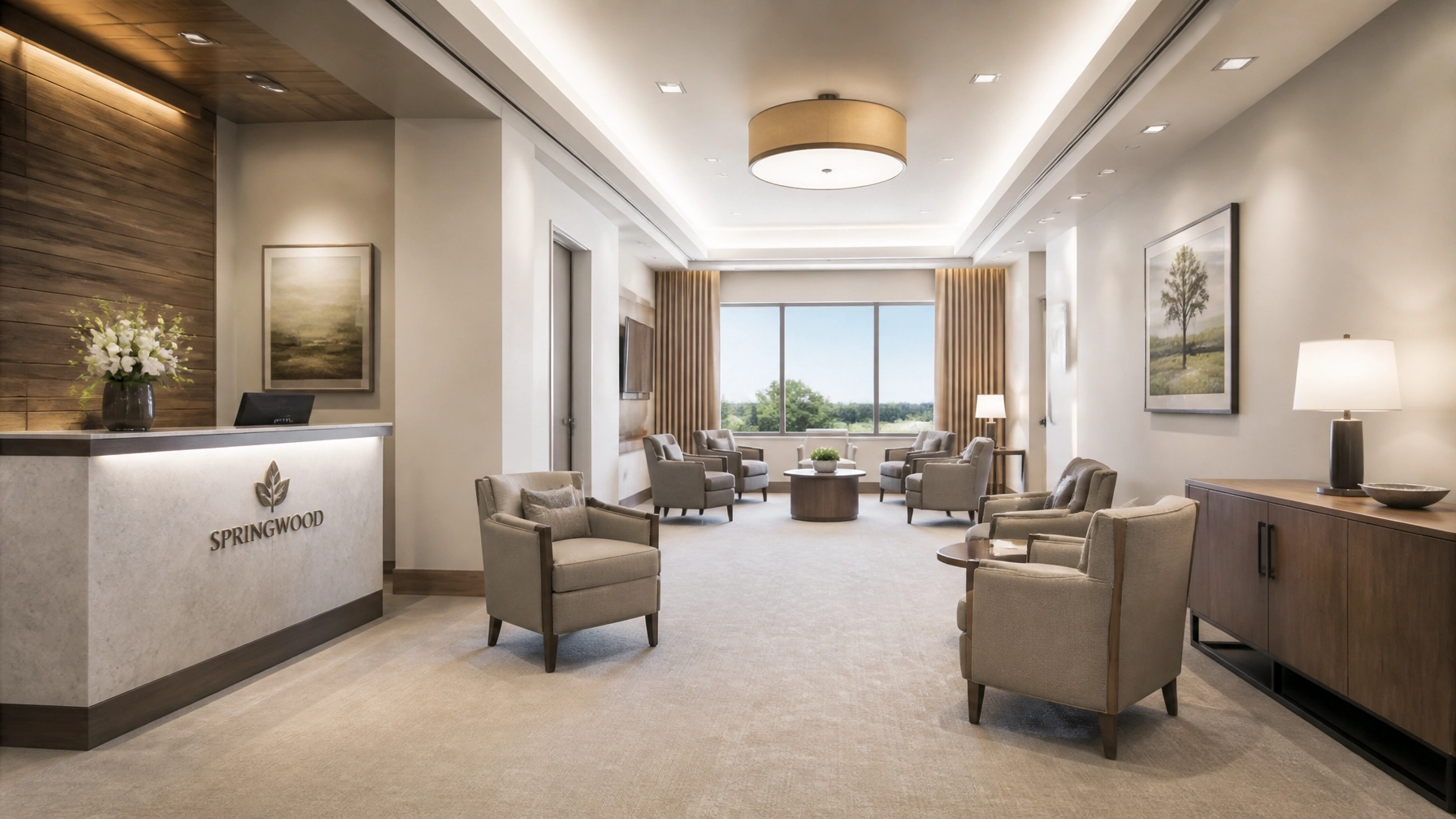
When owners and operators evaluate nursing home interior design, they often feel pulled between two competing goals. On one side is hospitality-style design: warm, welcoming, and residential in character. On the other is clinical design: clean, efficient, and clearly organized around care delivery. Both approaches can support resident well-being, staff performance, and family confidence, but each does so in different ways.
The real question is not whether a nursing home should look like a hotel or a hospital. The better question is how the environment should support the people who use it every day: residents, families, caregivers, and operators. In many cases, the strongest senior living interior design and assisted living interior design solutions are not purely one or the other. They combine the comfort and dignity of hospitality with the safety, durability, and compliance of healthcare planning.
Understanding Hospitality-Style Design in Nursing Homes
Hospitality-style design borrows cues from hotels, residential lounges, and upscale community spaces. In a nursing home setting, that usually means softer materials, warmer lighting, more inviting furniture, and a stronger emphasis on emotional comfort.
Common characteristics include:
- Warm wood tones and layered neutral palettes
- Lounge-style seating and residential furniture profiles
- Decorative lighting rather than only overhead fixtures
- Artwork, millwork, and textiles that reduce an institutional feel
- Social spaces designed to encourage gathering and visitation
- Resident rooms that feel more personal and less medical
For operators, the appeal is clear. A hospitality-driven environment can improve first impressions, support marketing and occupancy goals, and help families feel more confident in the quality of care. It can also contribute to resident dignity by making daily life feel less clinical and more familiar.

Pros of Hospitality-Style Design
Hospitality-focused nursing home interior design can create several meaningful advantages:
-
A more welcoming resident experience
Soft finishes, comfortable seating, and a residential atmosphere can reduce stress and make the environment feel calmer and more humane. -
Stronger family perception
Families often judge a community within moments of arrival. A warm entry, attractive common areas, and thoughtfully designed rooms can immediately communicate quality and care. -
Support for social engagement
Well-designed lounges, dining spaces, and activity areas can encourage interaction, which is especially important in senior living interior design. -
Better alignment with modern market expectations
Many residents and families no longer accept institutional environments as the norm. Hospitality-inspired interiors can help communities remain competitive.
Cons of Hospitality-Style Design
Hospitality-style environments also come with important limitations if they are not carefully planned:
-
Potential maintenance challenges
Upholstery, decorative finishes, and softer materials may wear faster or require more specialized cleaning if they are not selected for healthcare use. -
Risk of underemphasizing clinical needs
A space that looks appealing but does not support staff workflow, infection control, or safety can create operational problems. -
Higher specification complexity
Achieving a warm aesthetic with healthcare-grade materials takes discipline. Operators cannot simply choose residential products and expect them to perform in a high-use care setting. -
Possibility of confusing wayfinding or function
If design decisions prioritize appearance over clarity, residents, staff, and visitors may have a harder time navigating the environment.
Understanding Clinical Design in Nursing Homes
Clinical design is rooted in healthcare performance. It emphasizes hygiene, durability, staff visibility, code compliance, and efficient care delivery. In many nursing homes, this approach is reflected in brighter lighting, easy-to-clean surfaces, simplified layouts, and furniture or finishes selected primarily for performance.
Typical characteristics include:
- Durable, non-porous, and cleanable materials
- Strong support for infection prevention protocols
- Clear circulation paths and visual supervision
- Functional lighting for care tasks
- Standardized room layouts to support operations
- Finish selections driven by safety and longevity
This approach remains important because nursing homes are healthcare environments. Residents may have mobility limitations, cognitive decline, chronic conditions, or a need for frequent clinical intervention. Good assisted living interior design and nursing home planning must acknowledge those realities.
Pros of Clinical Design
A clinically oriented environment offers several operational strengths:
-
Better support for safety and infection control
Cleanable surfaces, durable flooring, and carefully detailed transitions can help reduce maintenance concerns and support sanitation protocols. -
Improved staff efficiency
Layouts that prioritize visibility, storage access, and direct circulation can help staff respond faster and work more effectively. -
Stronger long-term durability
Materials chosen for healthcare performance often withstand heavy traffic, equipment use, and frequent cleaning better than residential alternatives. -
Clearer alignment with regulatory requirements
Clinical planning typically makes it easier to address accessibility, life safety, and operational standards from the outset.

Cons of Clinical Design
An overly clinical environment can also create drawbacks:
-
Institutional appearance
Spaces that feel cold or sterile may increase anxiety for residents and visitors and can undermine the sense of home that many operators want to provide. -
Reduced emotional comfort
Bright lighting, hard finishes, and minimal visual warmth may support tasks but do little to improve day-to-day quality of life. -
Weaker differentiation in the market
Communities with a dated medical look may struggle to compete with newer facilities that offer a more elevated resident experience. -
Potential impact on resident dignity
When interiors feel purely functional, residents may feel more like patients than people living in a community.
Side-by-Side Comparison
| Feature | Hospitality-Style Design | Clinical Design | Balanced Approach |
|---|---|---|---|
| Overall Feel | Warm, residential, inviting | Functional, medical, controlled | Comfortable and professional |
| Lighting | Softer, layered, ambient | Bright, task-oriented | Layered lighting with task support |
| Materials | Textured, decorative, comfort-focused | Non-porous, durable, cleanable | Healthcare-grade materials with warmer aesthetics |
| Furniture | Residential look and feel | Utility-driven, easy to sanitize | Supportive furniture with hospitality character |
| Wayfinding | May rely on atmosphere and visual cues | Clear and standardized | Clear navigation with softer presentation |
| Resident Perception | More dignified and home-like | More institutional | Reassuring, safe, and welcoming |
| Staff Support | Can vary depending on planning | Typically strong operational support | Designed for both workflow and resident comfort |
What Nursing Home Owners Should Prioritize
For most operators, the best decision is not to choose one philosophy in isolation. The goal of effective nursing home interior design is to support care outcomes while improving the lived experience of the community.
Key priorities should include:
- Safety first: flooring, lighting, bathroom design, handrails, and furniture must support mobility, stability, and supervision.
- Durability and cleanability: every finish should be evaluated for maintenance, sanitation, and long-term replacement cycles.
- Resident dignity: privacy, comfort, acoustics, and a less institutional atmosphere matter in daily life.
- Staff workflow: storage, charting areas, care access, and visibility should improve efficiency rather than create friction.
- Family confidence: the environment should communicate quality, order, and compassion.
- Brand positioning: design should align with the type of experience the community wants to deliver.

How to Blend Hospitality and Clinical Design Successfully
The strongest senior living interior design strategies blend hospitality and clinical thinking in practical ways. That means creating spaces that feel warm without sacrificing performance.
Examples of this balance include:
- Using healthcare-grade vinyl wall protection in colors and textures that resemble residential millwork
- Selecting performance upholstery with soft hand and refined detailing
- Layering ambient, decorative, and task lighting to support both comfort and care
- Designing nurse support areas that are efficient but visually integrated into shared spaces
- Creating resident rooms with hospitality-inspired palettes while maintaining proper clearances and accessible layouts
- Using wayfinding that feels intuitive and welcoming rather than overtly institutional
In assisted living interior design and nursing home environments alike, this blended model often produces the best results because it respects both operational realities and human needs.
Operational Considerations for Senior Living Operators
Owners and operators should also evaluate design decisions through an operational lens. A beautiful environment only performs well if it can be maintained, staffed, and used effectively over time.
Important questions include:
- Will the finish palette hold up to frequent cleaning and disinfection?
- Are furnishings easy to move, repair, and replace?
- Do common areas support both social use and supervision?
- Are residents with mobility or cognitive challenges able to navigate the space comfortably?
- Does the design improve occupancy appeal without increasing avoidable maintenance costs?
These are the questions that separate attractive spaces from effective ones. Thoughtful nursing home interior design must address both.

Conclusion
So, which is better for a nursing home: hospitality-style design or clinical design? For most communities, the answer is neither extreme.
A purely hospitality-driven environment can fall short if it ignores durability, infection control, and staff workflow. A purely clinical environment can meet technical requirements while still feeling cold and impersonal. The most successful projects combine the strengths of both. They use healthcare planning principles to support safety and operations, while incorporating the warmth, comfort, and dignity that residents and families want to feel.
For nursing home owners and senior living operators, that balance is where design becomes most valuable. It strengthens resident experience, supports staff performance, and creates a setting that feels both capable and caring. That is the goal of effective senior living interior design, and it is what makes well-executed assisted living interior design and nursing home environments more resilient over time.
Leave a Reply